



Last-minute call places PM at center of historic peace talks
New Delhi/Cairo, October 12, 2025 – Prime Minister Narendra Modi received an unexpected invitation from President Donald Trump and President Abdel Fattah el-Sisi late Saturday evening to attend tomorrow’s Gaza peace summit in Sharm el-Sheikh, Egypt. The PMO has not yet confirmed whether Modi will travel to participate in what organizers call a decisive moment for Middle East stability.
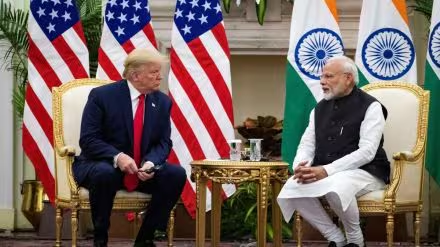
Breaking development
The invitation to Modi came through diplomatic channels Saturday evening, sources revealed to multiple news outlets. President Trump and his Egyptian counterpart jointly extended the invitation as part of expanding the summit’s global reach. More than 20 world leaders are now expected to gather in the Red Sea resort city Monday afternoon for what officials describe as a signing ceremony to formalize the Gaza ceasefire framework.
The timing underscores the summit’s urgency, coming just days after a ceasefire took effect between Israel and Hamas following two years of devastating conflict. The ceasefire represents the first phase of Trump’s comprehensive 20-point peace plan, which aims to end the Gaza war permanently while establishing sustainable security arrangements.
Summit significance
The Sharm el-Sheikh gathering represents a critical juncture in Gaza peace efforts. Co-chaired by Trump and Sisi, the summit will bring together leaders from Europe, the Middle East, and beyond to endorse the peace framework and coordinate implementation mechanisms. Confirmed attendees include UK Prime Minister Keir Starmer, French President Emmanuel Macron, Spanish Prime Minister Pedro Sanchez, and Italian Prime Minister Giorgia Meloni.
Moreover, the summit aims to transition from ceasefire to lasting peace through coordinated international support. The agenda encompasses humanitarian aid delivery, reconstruction planning, prisoner exchanges, and establishing monitoring mechanisms to ensure compliance. Organizers view Monday’s meeting as essential for translating the current truce into enduring stability.
India’s strategic calculations
Modi’s potential participation carries significant diplomatic weight for India’s regional positioning. Attending would demonstrate New Delhi’s commitment to peace while strengthening ties with key partners including Egypt and the United States. The summit also offers opportunities to engage directly with Trump on bilateral issues ranging from trade to technology cooperation.
Furthermore, India’s presence would underscore its evolving West Asia strategy, which seeks balanced engagement across the region’s diverse stakeholders. New Delhi has maintained relationships with Israel, Arab nations, and Iran while supporting Palestinian aspirations for statehood. The Gaza summit invitation reflects international recognition of India’s constructive diplomatic role.
Current ceasefire status
The ceasefire that began Friday has largely held, with Palestinian civilians returning to previously evacuated areas of Gaza. Israeli forces completed their withdrawal to agreed positions, creating space for humanitarian aid delivery and prisoner exchanges. Under the first phase, Hamas will release all remaining hostages while Israel frees Palestinian prisoners, including women and children detained since October 2023.
International monitors are establishing coordination centers to oversee implementation while aid organizations prepare massive relief operations. The success of this initial phase determines whether negotiations can advance to more complex issues including Gaza’s long-term governance and security arrangements.
Global response
World leaders have expressed cautious optimism about the ceasefire while emphasizing the need for sustained international commitment. European nations view the summit as crucial for preventing renewed violence while ensuring humanitarian access to Gaza’s devastated population. Arab countries see the gathering as an opportunity to advance Palestinian interests within a broader regional security framework.
Additionally, the summit reflects Trump’s diplomatic priorities in the Middle East, where he seeks to leverage American influence for conflict resolution. The president’s approach emphasizes practical steps rather than comprehensive final status negotiations, focusing on immediate humanitarian needs and security requirements.
Implementation challenges
Despite the breakthrough, significant obstacles remain for sustainable peace. Hamas retains influence in Gaza while Israel maintains security concerns about weapon smuggling and militant regrouping. The international community must coordinate reconstruction efforts while addressing competing claims over Gaza’s future governance structure.
Regional dynamics also complicate implementation prospects. Iran’s relationship with Hamas, Arab nations’ varying positions on Palestinian statehood, and Israel’s political constraints all influence the peace process trajectory. Monday’s summit must address these complexities while maintaining momentum from the current ceasefire.
Modi’s diplomatic options
If Modi attends, he would join a select group of leaders endorsing Trump’s peace initiative at a historic moment. The summit offers platforms for bilateral meetings with Trump, Sisi, and other regional leaders while demonstrating India’s commitment to international cooperation. Such visibility could enhance India’s role in future Middle East diplomacy.
Alternatively, if scheduling or other considerations prevent attendance, India could still support the process through diplomatic channels and eventual participation in implementation mechanisms. New Delhi’s ultimate decision will balance immediate diplomatic opportunities against broader strategic considerations and domestic priorities.
Humanitarian dimensions
The summit’s humanitarian focus aligns with India’s traditional emphasis on supporting Palestinian welfare while maintaining regional stability. Gaza’s reconstruction will require massive international coordination, where India’s technical expertise and development experience could prove valuable. The gathering also addresses urgent needs including medical supplies, clean water, and educational infrastructure.
Beyond immediate relief, the peace process envisions transforming Gaza into a prosperous, demilitarized territory that benefits all residents. This vision requires sustained international commitment and innovative approaches to governance, security, and economic development that the summit aims to coordinate.
Next steps
Monday’s agenda includes working sessions on security arrangements, humanitarian coordination, and reconstruction planning before the main plenary session. Leaders will review implementation timelines while addressing potential obstacles to sustained peace. The summit concludes with a signing ceremony formalizing international commitments to the peace process.
The gathering’s outcomes will shape Gaza’s future while influencing broader Middle East dynamics. Success could catalyze similar diplomatic initiatives across the region, while failure might undermine confidence in negotiated solutions to complex conflicts.
Looking ahead
Regardless of Modi’s final decision, Monday’s summit marks a pivotal moment for Gaza and regional stability. The international community’s response will determine whether the current ceasefire evolves into lasting peace or becomes another temporary pause in a cyclical conflict. India’s role in this process reflects its growing global influence and commitment to multilateral diplomacy.
The Modi invitation also signals India’s enhanced standing in international peace efforts, where New Delhi’s balanced approach and development experience offer unique contributions. Tomorrow’s summit will test whether diplomatic momentum can overcome historical obstacles to Middle East peace.