




The detention of Mehraj Malik, Jammu and Kashmir’s lone Aam Aadmi Party MLA, marks a watershed moment in the region’s political landscape. For the first time in history, a sitting legislator faces detention under the stringent Public Safety Act Jammu Kashmir, highlighting the controversial reach of this preventive detention law. This historic case brings renewed scrutiny to the PSA Public Safety Act, a 1978 legislation that survived the abrogation of Article 370 and continues to shape political discourse in the Union Territory.
Understanding PSA: From Timber Smuggling to Political Control
Sheikh Abdullah’s 1978 Legacy
The PSA Public Safety Act Jammu Kashmir emerged from pragmatic concerns rather than political ambition. Sheikh Abdullah, founder of the National Conference and then Chief Minister, introduced this preventive detention law with a stated objective: “keep timber smugglers out of circulation”. However, the legislation’s political underpinnings became evident when Abdullah himself first deployed it against political rivals rather than forest criminals.
Moreover, the law received the Governor’s assent on April 8, 1978, during Abdullah’s tenure following his 1975 accord with the Indira Gandhi government. Nevertheless, critics argue that the timing revealed deeper motivations beyond environmental protection. Furthermore, the Act’s broad language allowed administrative detention for anyone above 18 years without trial for up to two years.
Evolution Beyond Original Purpose
Subsequently, the PSA’s scope expanded dramatically from its humble timber-focused origins. After militancy erupted in Jammu Kashmir during the late 1980s, successive governments increasingly relied on this preventive detention law to manage separatists and alleged militant sympathizers. Additionally, the legislation became a tool for political control rather than forest conservation.
Consequently, human rights organizations labeled the PSA a “lawless law” and “fascist law” due to its arbitrary application. Meanwhile, approximately 20,000 people faced detention under this controversial statute over three decades. Therefore, the Act’s transformation from anti-smuggling measure to political weapon demonstrates how emergency laws often exceed their intended scope.
Police personnel walking under caution tape highlight concerns over the Kashmir Public Safety Act humanrightsinitiative
Mehraj Malik Case: Breaking Political Barriers
First Sitting MLA Detained
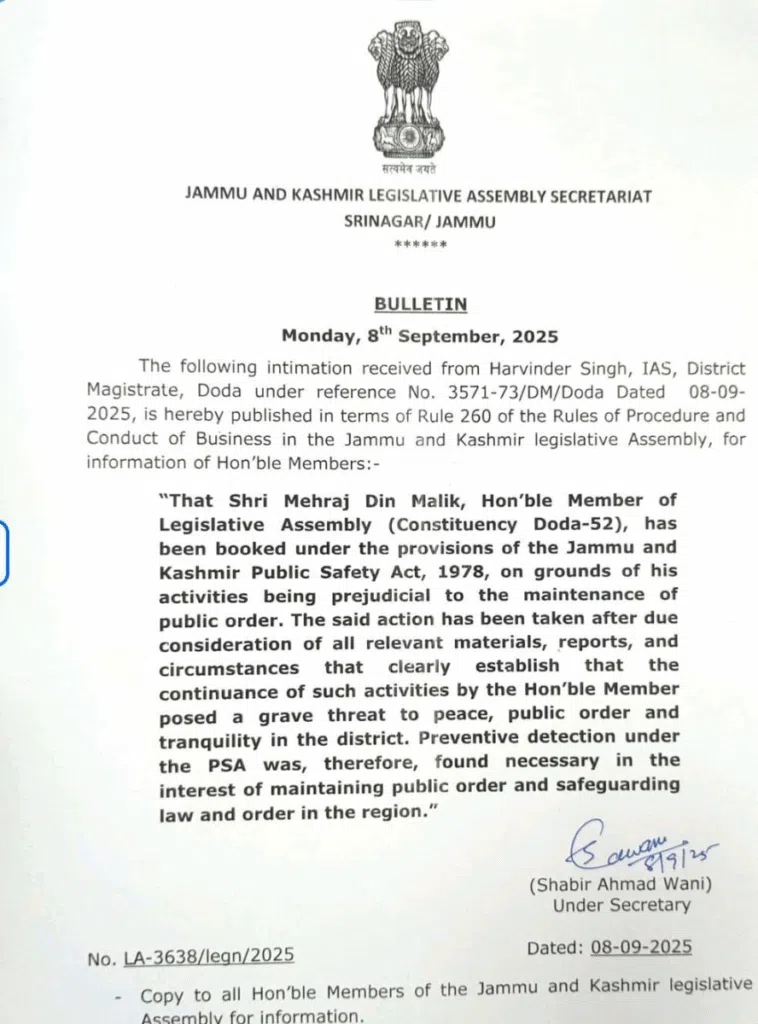
Mehraj Malik’s detention under the PSA Public Safety Act represents an unprecedented escalation in Kashmir’s political dynamics. Officials arrested the 37-year-old AAP leader at Dak Bungalow in Doda while he planned to visit flood-affected areas of his constituency. Furthermore, the District Magistrate justified this preventive detention as “necessary in the interest of maintaining public order and safeguarding law and order”.
Additionally, police prepared a comprehensive dossier citing 18 FIRs and multiple complaints against Malik before recommending PSA detention. However, the immediate trigger involved Malik’s confrontation with Deputy Commissioner Harvinder Singh over unpaid rent to a villager for a health center. Consequently, the MLA’s use of “abusive language” on social media against the DC prompted administrative action.

AAP MLA Mehraj Malik from Doda, associated with his detention under the PSA law in Jammu and Kashmir
The Doda District Controversy
The health center dispute in Kencha village exposed deeper administrative tensions. Malik accused the district administration of favoritism and corruption in relocating the medical facility. Similarly, he alleged that officials hadn’t paid rent to the building owner for two years. Therefore, his social media campaign against the Deputy Commissioner escalated tensions beyond normal political discourse.
Meanwhile, government employees organized massive protests supporting the DC after Malik’s derogatory social media posts. Consequently, they accused the MLA of being a “habitual troublemaker” who regularly abused senior officials. Thus, the controversy transformed from a local administrative issue into a broader question of elected representatives’ conduct.
PSA Powers: Administrative Detention Without Trial
Legal Framework Analysis
The Jammu Kashmir Public Safety Act grants extraordinary powers to district-level officials for preventive detention. District Magistrates possess sole authority to issue detention orders based on police dossiers explaining why someone requires PSA detention. Furthermore, these administrative orders bypass normal judicial procedures, allowing detention without formal charges or trial.
Additionally, the Act permits detention for up to two years in cases involving state security and one year for public order offenses. However, amendments in 2011 initially reduced these periods to six months and three months respectively. Nevertheless, provisions exist to extend detention back to the original maximum periods.
District Magistrate Authority
Significantly, PSA implementation relies heavily on executive discretion rather than judicial oversight. Police prepare detailed dossiers against accused individuals, then submit recommendations to District Magistrates. Subsequently, these officials decide whether detention orders should be issued. Moreover, in rare instances involving ordinary citizens, District Magistrates occasionally reject police recommendations.
However, political leaders rarely receive such administrative protection from PSA detention. Therefore, the system creates potential for arbitrary use against elected representatives like Mehraj Malik. Consequently, legal challenges typically require habeas corpus petitions in High Courts, where most PSA cases face dismissal.
Surviving Article 370: Laws That Remained
Reorganisation Act Retention
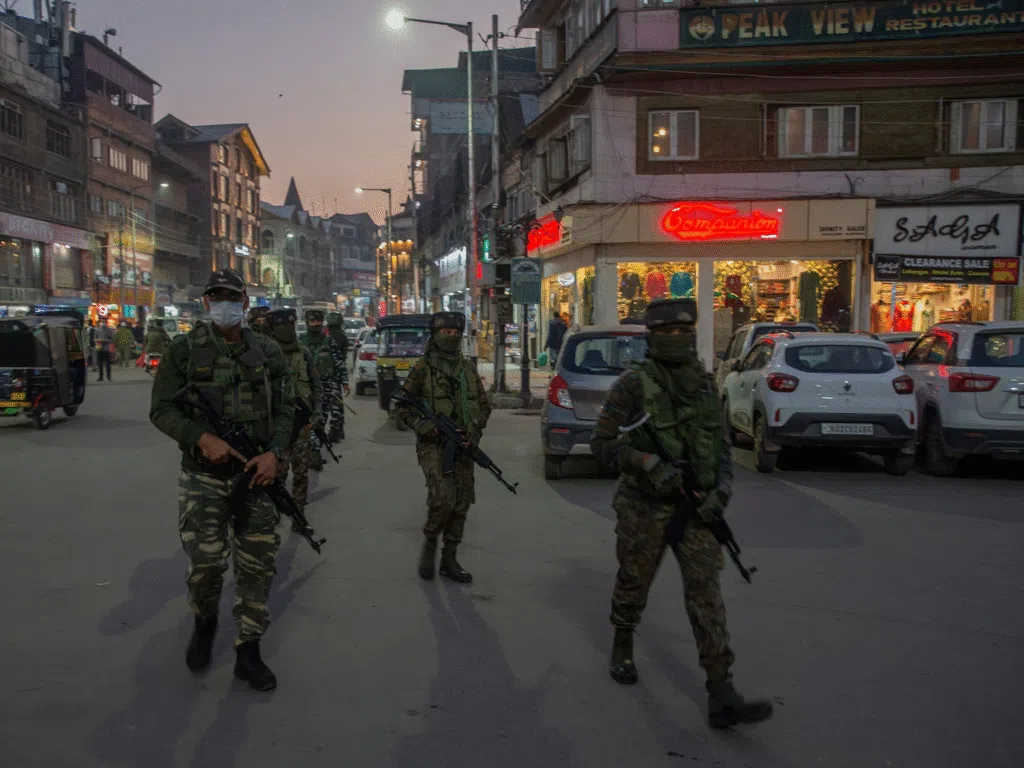
Remarkably, the PSA Public Safety Act survived the comprehensive legal overhaul following Article 370’s abrogation in August 2019. While the Centre repealed over 400 laws during Jammu Kashmir’s reorganization into Union Territories, PSA gained explicit retention. Furthermore, the Jammu and Kashmir Reorganisation Act specifically enumerated PSA among continued applicable laws.
Additionally, the central government argued that PSA “shall be deemed to have been passed by Parliament” following reorganization. Therefore, this preventive detention law now operates under federal authority rather than state legislature control. Consequently, PSA represents one of few pre-2019 Kashmir-specific laws maintaining legal validity.
Federal vs State Powers
Interestingly, the PSA’s retention contrasts sharply with the Centre’s claims about eliminating discriminatory Kashmir laws. Most other Jammu Kashmir statutes mirrored central legislation and faced repeal during reorganization. However, authorities preserved laws deemed useful for maintaining control, including PSA.
Moreover, legal experts question whether Union Territory assemblies possess authority to amend or repeal PSA. Since public order falls under federal jurisdiction post-reorganization, Kashmir’s legislature may lack power to modify this preventive detention law. Therefore, promises by political parties to repeal PSA may face constitutional limitations.
Political Reactions: Democracy Under Question
Omar Abdullah’s Response
Chief Minister Omar Abdullah strongly condemned Mehraj Malik’s PSA detention, questioning its democratic implications. “There is no justification for detaining Mehraj Malik under PSA. He’s not a threat to ‘public safety’ and using this discredited law to detain him is wrong,” Abdullah stated. Furthermore, he warned that such actions against elected representatives undermine public faith in democracy.
Similarly, Abdullah highlighted selective enforcement, noting lack of action against those who “played with religious sentiments” at Hazratbal Shrine. Therefore, he characterized PSA use as harassment of innocents while real troublemakers escape consequences. Consequently, his criticism reflects broader concerns about administrative overreach in Kashmir politics.
Opposition Criticism
Multiple opposition parties condemned Malik’s detention as an assault on democratic principles. Peoples Conference chairman Sajjad Lone termed it “another assault on the democratic fabric of Jammu and Kashmir”. Additionally, PDP leader Waheed Para criticized using “draconian laws to silence political voices and crush dissent”.
Meanwhile, AAP convenor Arvind Kejriwal questioned whether demanding healthcare facilities constituted such grave crimes warranting MLA imprisonment. Therefore, political opposition unified across party lines against PSA’s application to elected representatives. Consequently, the case sparked broader debates about democracy’s health in post-Article 370 Kashmir.
Conclusion
The Mehraj Malik case exposes fundamental tensions between administrative authority and democratic representation in contemporary Kashmir politics. PSA’s evolution from anti-smuggling tool to political control mechanism demonstrates how emergency laws often exceed their original scope. Furthermore, the Act’s survival post-Article 370 abrogation reveals selective retention of controversial legislation.
Therefore, this historic detention of Kashmir’s first sitting MLA under PSA raises serious questions about democratic space in the Union Territory. Moreover, the incident highlights ongoing struggles between elected representatives and administrative machinery in the region. Consequently, the case may accelerate demands for PSA reform or repeal, though constitutional limitations may constrain such efforts in the current federal structure.