




Exclusive: Presidential order to stagger terms denied before VP poll.
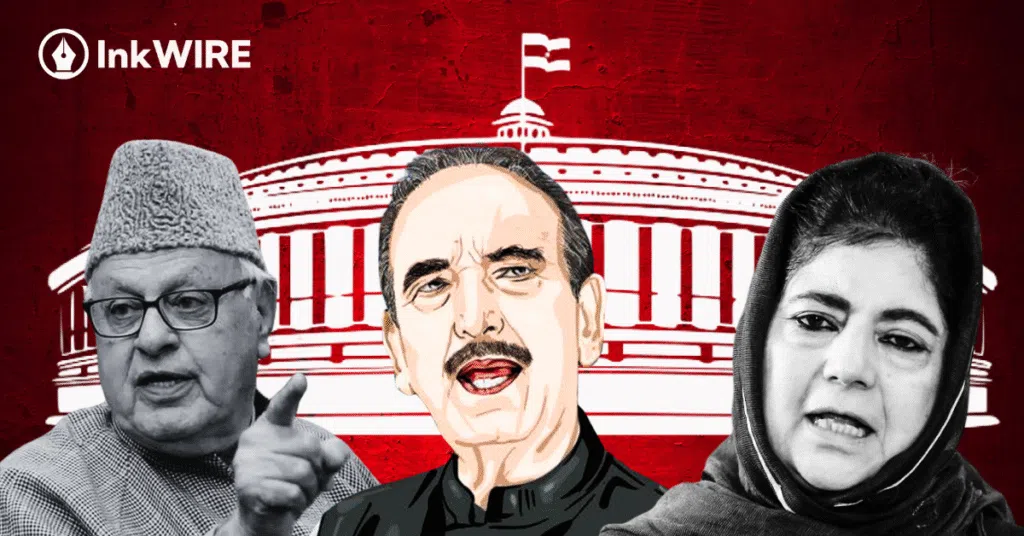
The focus today is clear: Law Ministry rejects EC request to stagger Rajya Sabha terms for J&K MPs through a Presidential Order. Moreover, the ministry told the Election Commission on August 22 that existing law offers no such provision. Consequently, the four J&K Rajya Sabha seats continue to remain vacant, nearly four and a half years after terms ended in February 2021. Notably, Law Ministry rejects EC request despite the Upper House’s rotation principle under Article 83 requiring one-third retirements every two years.
What happened
The Election Commission sought a Presidential Order to reset J&K’s Rajya Sabha terms so one-third of the four seats would fall vacant biennially. However, Law Ministry rejects EC request, citing that the Representation of the People Act does not currently empower such a J&K-specific curtailment. Specifically, the ministry conveyed that only the first Rajya Sabha (1952) and a subsequent 1956 exercise under the Seventh Amendment enabled such curtailments. Therefore, officials indicated any new move would require legislative amendment applicable to all similarly placed states or territories.
Why J&K seats are concurrent
J&K’s Rajya Sabha terms became concurrent due to repeated spells of President’s Rule and earlier exigencies that disrupted the normal rotation cycle. The four members’ terms ended together in February 2021, leaving the Union Territory unrepresented in the Upper House since then. Meanwhile, an elected Assembly returned in October last year, yet the seats remain unfilled, compounding the representation vacuum. As a result, J&K will lack Rajya Sabha votes during the Vice-President election slated for September 9.
The legal backdrop
Under Article 83, the Rajya Sabha is a permanent body, with one-third of members retiring every second year to ensure continuity. As per Section 154 of the Representation of the People Act, 1951, the President previously issued curtailment orders in 1952 and again in 1956 after constitutional changes. Importantly, Law Ministry rejects EC request because Section 154 does not cover a fresh, one-off order tailored only to J&K today. Instead, any such realignment would require an amendment, uniformly covering all states facing concurrent-term anomalies.
What the law says
“Upon the first constitution of the Council of States, the President shall, after consultation with the Election Commission, make by order such provision as he thinks fit for curtailing the term of office of some of the members…” “In order that, as nearly as may be, one-third of the members may retire on the second day of April 1958… the President shall… after consultation with the Election Commission, make by order such provisions as he thinks fit…” These historic provisions applied at inception and post-1956 restructuring, not for present-day, state-specific term resets.
Similar anomalies in other regions
The same rotation breakdown exists in Punjab and Delhi, where all Rajya Sabha members retire together rather than in the mandated stagger. Moreover, the J&K situation mirrors broader disruptions caused by emergencies or delayed nominations that bunched retirements into single cycles. Yet, the EC reportedly sought a Presidential Order only for J&K, which the ministry declined under current law. Additionally, reports suggest a Presidential reference to the Supreme Court under Article 143 could be considered to clarify the path forward.
Stakes before the VP election
With Law Ministry rejects EC request, the timing intensifies pressure as the Vice-President election nears without J&K’s Rajya Sabha representation. Previously, J&K also had no presence during the 2022 Presidential election in which Droupadi Murmu was elected. Therefore, the absence of Upper House voices from J&K raises constitutional and political concerns about federal representation at pivotal moments. Furthermore, J&K retains five Lok Sabha MPs, but the Upper House gap remains a structural deficiency.
Reactions and political context
Chief Minister Omar Abdullah has questioned the continuing delay in filling the four Rajya Sabha seats, urging clarity on EC timelines. He noted that the Assembly has already met twice since elections, yet Upper House seats remain vacant. “We don’t understand… I don’t understand why these elections are being put on the back burner,” he said in a recent interview. Additionally, he pressed for by-elections to two Assembly seats alongside Rajya Sabha polls to restore institutional normalcy.
What could happen next
First, Parliament could amend the Representation of the People Act to authorize a contemporary, uniform mechanism for resetting staggered terms across affected regions. Second, a Presidential reference under Article 143 could seek the Supreme Court’s opinion on restoring rotation without fresh legislation. Third, the EC could still proceed to conduct elections, but terms would remain concurrent unless the law changes. Consequently, Law Ministry rejects EC request sets the stage for a legal or legislative fix rather than an executive order.
Why the Commission asked
The EC aimed to align J&K with the Rajya Sabha’s core design: continuous renewal with one-third of members retiring every two years. Moreover, staggering terms supports stability, institutional memory, and periodic infusion of state-level voices in the national chamber. However, Law Ministry rejects EC request, emphasizing adherence to the text and history of Section 154’s limited curtailment windows. Notably, any J&K-specific order would create uneven treatment unless mirrored for Punjab, Delhi, and other similarly situated states.
The bottom line
Law Ministry rejects EC request for a Presidential Order today because the law confines curtailments to foundational moments, not ad hoc fixes. Nevertheless, the representation void in J&K’s Upper House continues, affecting its say in imminent national decisions. Therefore, durable solutions now lie with Parliament or possibly the Supreme Court via a Presidential reference. Until then, Law Ministry rejects EC request, and the four J&K Rajya Sabha seats remain empty.