



Nagpur | October 2, 2025
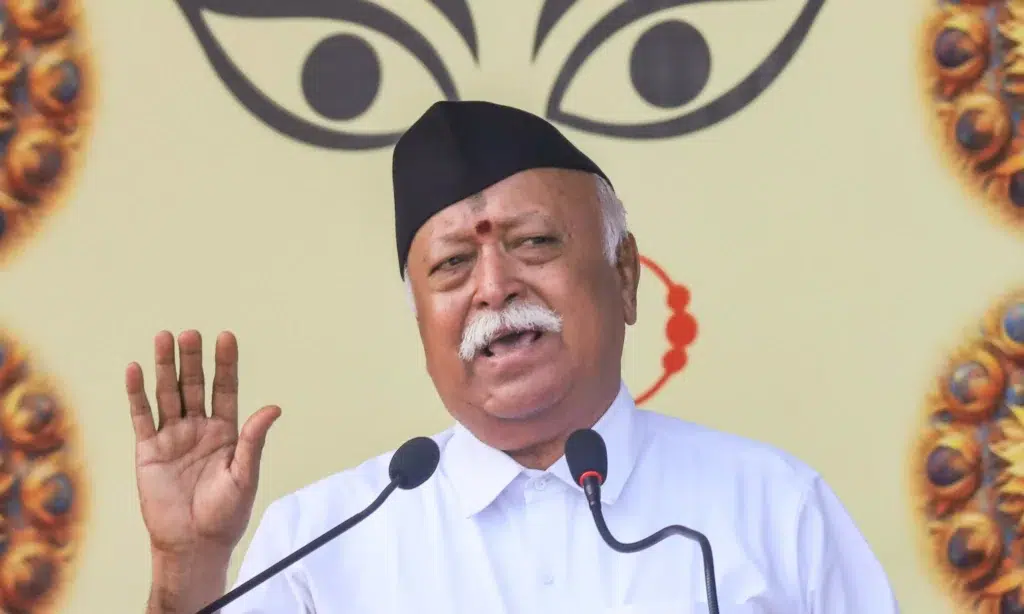
Mohan Bhagwat Vijayadashami speech set a decisive tone on security, economy, environment, and neighbourhood churn today. Moreover, he warned about widening inequality while urging swadeshi, self‑reliance, and democratic restraint amid regional volatility in South Asia. Notably, this Mohan Bhagwat Vijayadashami speech underscored lessons from terror, tariffs, climate alarms, and street unrest next door. Additionally, the Mohan Bhagwat Vijayadashami speech tied national resilience to social unity and balanced development goals during the centenary year. Furthermore, the Mohan Bhagwat Vijayadashami speech pressed for vigilance in diplomacy and compassion at home with tangible developmental follow‑through. Therefore, the Mohan Bhagwat Vijayadashami speech offered a roadmap linking security, equality, ecology, and democracy for Bharat’s resurgence. Finally, this Mohan Bhagwat Vijayadashami speech urged action that is principled, people‑centric, and grounded in cultural confidence.
Dateline
Nagpur, October 2, 2025 — RSS marked its centenary with the Vijayadashami address at Reshimbagh grounds. Additionally, the day coincided with national reflections and fresh debates ignited by the wide‑ranging speech themes and quotes. Consequently, policy, society, and diplomacy all came under sharp focus in Bhagwat’s compact yet expansive message today. Importantly, the centenary context framed a call to introspection, duty, and disciplined nation‑building in a turbulent year.
Key takeaway 1: Terror and friendships
Bhagwat referenced the Pahalgam terror attack that killed 26 tourists and the state’s deliberate response afterward. Moreover, he said the episode revealed national solidarity and also showed which nations stood firmly by India’s side. “The role played by various nations after this incident revealed our true friends,” he emphasized pointedly. Additionally, he framed this as a test of resilience at home and reliability abroad under mounting global fault lines. Therefore, the Mohan Bhagwat Vijayadashami speech linked counter‑terror readiness with clear‑eyed, interest‑based diplomacy.
Key takeaway 2: Naxalism and development
Bhagwat said Left‑Wing Extremism is largely under control due to firm state action and public realization. However, he stressed that durable peace needs an action plan anchored in justice, development, empathy, and harmony. Additionally, he traced insurgent appeal to exploitation, neglect, and administrative insensitivity in affected regions across decades. Consequently, the Mohan Bhagwat Vijayadashami speech urged immediate development dividends to lock in hard‑won security gains. Notably, this blends counterinsurgency successes with governance reforms and social investment for lasting stability.
Key takeaway 3: Growth and inequality
Bhagwat flagged widening gaps between rich and poor, warning against concentration of economic power and exploitation. Moreover, he argued the prevailing model fuels environmental degradation and transactionalism, corroding social bonds and empathy. “The flaws of the prevailing economic system are globally exposed,” he said, urging a holistic alternative for progress. Additionally, he pressed swadeshi and swavalamban, linking self‑reliance with freedom to act on national priorities. Therefore, the Mohan Bhagwat Vijayadashami speech tied Aatmanirbhar goals to equity, justice, and ecological balance.
Key takeaway 4: Tariffs and self‑reliance
He pointed to US tariffs as interest‑driven moves that nonetheless affect many economies, including India’s. However, he cautioned that interdependence must not turn into compulsion that constrains sovereign decision‑making. “There is no substitute for Swadeshi and Swavalamban,” Bhagwat declared, advocating resilient domestic capabilities and choices. Additionally, he called for diplomacy with all friends while deepening self‑reliant economic structures at home. Consequently, the Mohan Bhagwat Vijayadashami speech fused foreign economic realism with national production confidence.
Key takeaway 5: Himalayan alarms
Bhagwat warned about irregular rainfall, glacier loss, and landslides intensifying across recent years in the Himalayas. Moreover, he called this a warning bell for Bharat and South Asia as climate risks cascade regionally. He tied the damage to a materialist, consumerist model misaligned with ecological limits and social responsibility. Additionally, he urged a holistic development path rooted in balance, compassion, and sustainability for people and nature. Therefore, the Mohan Bhagwat Vijayadashami speech elevated ecology as core to national security and prosperity.
Neighbourhood churn and democracy
He highlighted regime changes and violent protests in Sri Lanka, Bangladesh, and Nepal as destabilizing signals. However, he insisted violent outbursts cannot deliver desirable change, urging transformation through democratic means alone. “Society can achieve such transformation only through democratic means,” he emphasized regarding regional upheavals nearby. Additionally, he called neighbours part of a larger family, seeking stability, prosperity, and well‑being across borders. Consequently, the Mohan Bhagwat Vijayadashami speech urged India to steady the region while guarding national interests.
Unity, discipline, and duty
The centenary setting sharpened a call for unity that rejects any “us versus them” divisiveness. Moreover, he warned against forces attempting to deepen social fault lines and provoke street‑level disorder. He urged restraint, civic responsibility, and dialogue that channels differences into democratic, constructive outcomes. Additionally, the address framed discipline and service as engines for leadership and character building nationwide. Therefore, the Mohan Bhagwat Vijayadashami speech centered social harmony as the foundation for national resurgence.
Why it matters now
Security demands steady preparedness, while diplomacy requires sobriety about allies, interests, and long‑term reliability. Additionally, inclusive growth must tackle inequality and exploitation without sacrificing environmental integrity or community well‑being. Climate disruptions are already visible, demanding policy realism and swift, science‑informed local and regional adaptation. Moreover, neighbourhood churn can spill over, so democratic pathways and stabilizing engagement remain vital strategic priorities. Consequently, the Mohan Bhagwat Vijayadashami speech offers a framework to align policy, society, and environment.
Notable quotes
“There is no substitute for Swadeshi and Swavalamban.”
“The regime change in Sri Lanka, Bangladesh, and Nepal is a concern for us.”
“The extremist Naxalist movement has been largely brought under control.”
“The occurrence of these disasters in the Himalayas should be considered a warning bell.