



In a bold move, Union Education Minister Dharmendra Pradhan clarifies that the Centre not imposing any language on any State remains a core principle. This statement addresses ongoing debates around the National Education Policy. Pradhan emphasizes flexibility in education.
Pradhan’s Clear Stance on Language Freedom
Dharmendra Pradhan recently defended the government’s position. He spoke at various events and through letters. Pradhan insists the Centre not imposing any language on any State. Instead, the policy promotes choice.
For instance, he addressed concerns from Tamil Nadu. Chief Minister MK Stalin raised issues about fund withholding. However, Pradhan explained that cooperation drives fund releases. He urged states to embrace multilingual education.
Moreover, Pradhan highlighted India’s linguistic diversity. Only 10% of Indians speak English fluently. The rest use local languages daily. Therefore, the policy encourages learning multiple tongues without force.
The National Education Policy Explained
The National Education Policy, or NEP 2020, forms the backdrop. It suggests a three-language formula for schools. Yet, Pradhan stresses flexibility. States choose their languages freely.
In Classes 1 and 2, students learn two languages. These include the mother tongue and one more. From Classes 6 to 10, they add a third. This setup builds skills gradually.
Additionally, Pradhan pointed to examples from other states. Punjab, Karnataka, and Maharashtra implement NEP smoothly. They face no language imposition issues. So, why the resistance elsewhere?
Pradhan questioned opponents directly. “People of Tamil Nadu accept English readily,” he said. “What harms accepting another Indian language?” This quote underscores his point.
Addressing Tamil Nadu’s Concerns
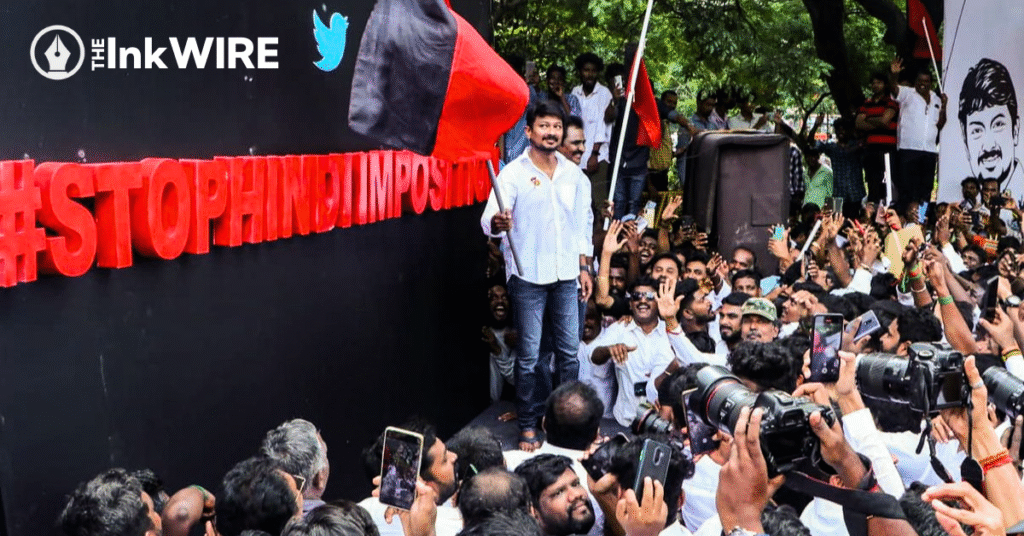
Tamil Nadu opposes the three-language model strongly. The state sticks to its two-language system: Tamil and English. Stalin accused the Centre of blackmail over funds.
However, Pradhan rejected these claims firmly. He called them politically motivated. “NEP upholds linguistic freedom,” Pradhan stated in a letter. “It does not impose any language.”
Furthermore, he appealed for unity. Education should rise above politics. Pradhan noted that NEP revives Indian languages like Tamil. This ancient tongue deserves promotion, not sidelining.
In fact, the government conducts exams in 13 major languages. Tamil stands among them. This move shows commitment to inclusivity.
Broader Implications for Indian Education
The debate extends beyond Tamil Nadu. Other states like Kerala and West Bengal raised similar objections. Yet, Pradhan attributes this to political positioning.
He argued that knowing more languages boosts employability. “It enhances personality too,” Pradhan told NDTV. Therefore, multilingualism benefits students long-term.
Moreover, NEP aims for global standards. It roots education in Indian culture. Pradhan recalled suggestions from leaders like Chandrababu Naidu. They proposed teaching even more languages.
Consequently, the policy facilitates, not barriers. States retain control over choices. The Centre not imposing any language on any State ensures this balance.
Quotes from Key Figures
Dharmendra Pradhan’s words carry weight. “There is no question of imposing any language on any state or community,” he affirmed. This reassures many.
Meanwhile, Stalin countered in his letter to PM Modi. “Our stand on two-language formula is non-negotiable,” he wrote. This highlights the tension.
Additionally, DMK MP Dayanidhi Maran clarified their position. “We are not against Hindi,” he said. “But it should not be compulsory.” Such statements fuel the discussion.
Pradhan responded thoughtfully. “The NEP is not recommending imposition of Hindi in Tamil Nadu,” he emphasized. This direct quote addresses fears head-on.
Why Multilingual Education Matters
India boasts incredible linguistic variety. Over 22 official languages exist. Millions speak regional dialects daily. Therefore, education must reflect this reality.
Pradhan advocates for mother tongue instruction. It helps young learners grasp concepts better. Then, adding other languages builds bridges.
For example, a student in Uttar Pradesh might learn Hindi, English, and Tamil. This fosters cultural understanding. Similarly, Tamil Nadu students could explore Marathi or Kannada.
However, resistance persists in some quarters. Critics fear cultural erosion. Yet, Pradhan insists NEP protects heritage. It strengthens local languages systematically.
In addition, employability rises with language skills. Global jobs demand versatility. Thus, the Centre not imposing any language on any State allows tailored approaches.
Challenges and the Path Forward
Despite clarifications, challenges remain. Fund allocation ties to MoUs. States must sign them for releases. Pradhan stressed mutual cooperation.
“We cannot impose political priority,” he asserted. This signals firmness. Yet, he invites dialogue.
Furthermore, non-BJP states implement NEP successfully. Assam and Odisha follow three-language models already. Their experiences prove feasibility.
Therefore, Pradhan calls for rising above differences. “Do not politicise education,” he urged Stalin. This plea aims at student welfare.
Looking ahead, more discussions seem likely. The Centre commits to NEP nationwide. However, flexibility remains key.
Embracing Diversity in Education
In conclusion, Dharmendra Pradhan’s message resonates clearly. The Centre not imposing any language on any State defines the approach. NEP promotes choice and growth.
By focusing on multilingualism, India builds a stronger future. Students gain skills without losing roots. Transitioning smoothly, states can collaborate effectively.
Ultimately, education unites the nation. Pradhan’s stance encourages this unity. As debates continue, clarity prevails.